

How Clear Aligners Move Teeth: Orthodontic Science Explained
 Medically Reviewed by Whistle Dental Team
Clear aligners look simple from the outside, yet the way they move teeth depends on a series of controlled steps.
Treatment relies on planned forces, small adjustments, and regular monitoring.
The trays are lightweight and transparent, but they function through specific biomechanical principles.
Patients often experience the process as routine-switching one tray for the next, but clinically, each stage represents a programmed shift that the teeth adapt to over time.
How the Aligners Exert Force
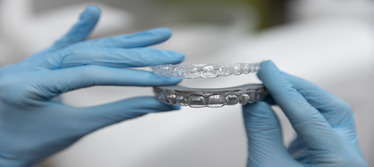
Aligners work by fitting tightly over the teeth. Every new tray has a slightly altered shape.
This difference creates pressure in certain directions. Once the tooth moves, the tray becomes passive.
The movement is gradual, often fractions of a millimeter at a time. Continuous heavy force isn’t the goal; the aligner relies on small, repeated changes.
Biological Changes Behind the Movement
When the aligner applies pressure on one surface of the root, bone cells in that area begin to remodel. On the opposite side, new bone forms.
This process is slow and depends on maintaining the right level of force.
Too much pressure can stall movement, while too little doesn’t stimulate the bone enough.
The aligners aim to stay within the biological limits so that the tooth shifts in a controlled manner.
Role of Attachments
Attachments are small resin shapes added to teeth. They help the aligner grip certain surfaces more effectively.
Some movements, especially rotations or vertical shifts, need these extra points of contact.
Without them, certain teeth may not follow the planned path as reliably.
Types of Movements Aligners Manage
Clear aligners handle several kinds of movement:
- mild to moderate crowding
- alignment of incisors
- controlled tipping
- closing small spaces
- limited arch expansion
More complex adjustments sometimes need extra aids like elastics or interproximal reduction or hybrid mechanics.
Why Treatment Depends on Consistent Wear
The aligner works only when it is worn. If the trays stay out for long periods, the programmed movement does not take place. Teeth may lag behind the plan.
Orthodontists monitor this at follow-up visits. If movements don’t match the expected stage, refinements or revised trays may be needed.
Refinement and Adjustments
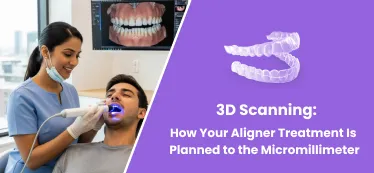
Refinements involve re-scanning the teeth and designing an additional set of aligners.
This accommodates normal biological variation or small deviations from the plan.
Refinement isn’t a setback; it’s part of aligner-based treatment for many patients.
Interproximal Reduction (IPR) When Needed
If space is required, orthodontists may remove a very small amount of enamel between select teeth.
This creates room for alignment without extracting teeth.
IPR supports planned movement and prevents the arch from expanding beyond its limits.
Movement of Posterior Teeth
Back teeth can be moved with aligners, but the mechanics differ from brackets.
Attachments or specific tray designs often guide these larger movements.
As the molars have broader roots, changes happen slowly and require close monitoring.
Patient Sensations During Tooth Movement
Most patients feel mild pressure for the first day or two after switching trays. This indicates active movement.
As the tooth adapts, the sensation decreases. If a tray feels loose too early, it may reflect inconsistent wear.
Why Small Steps Are Used
Each tray represents a small stage rather than a major shift. Moving a tooth too quickly risks damaging supporting tissues or creating instability.
Aligner planning software divides the entire treatment into these small intervals to maintain control over the biological response.
When Aligners Need Assistance
Some movements-vertical shifts, large rotations, or complex bite adjustments-may require supplemental tools.
Elastics, small buttons, or temporary anchorage devices can be used if needed.
These additions help maintain precision where the tray alone may not be enough.
Retention After Active Movement
Once the teeth reach their intended positions, retainers become essential. Bone and soft tissues need time to stabilise.
Retainers hold the alignment while this stabilization occurs. Without retention, the teeth tend to drift, regardless of how well aligners move them.
Professional Summary
Clear aligners guide tooth movement through carefully staged steps.
Each tray applies targeted pressure, prompting controlled biological remodeling.
Attachments, refinements, IPR, and occasional elastics support the process where required.
Consistency in wear and close monitoring determine how closely the treatment follows the original plan. When managed properly, aligners can produce reliable and stable orthodontic outcomes.
Book 3D Teeth Scan
Consult our experts and get a 3D preview of your smile transformation!
FAQ's
Q1.ok
ok

 Medically Reviewed by Whistle Dental Team


 Medically Reviewed by Whistle Dental Team









 Medically Reviewed by Whistle Dental Team