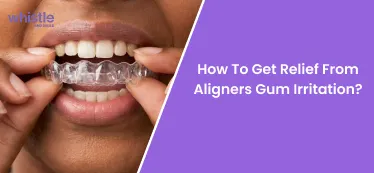


How to wear Aligners - Essential Tips for Best Results
 Medically Reviewed by Whistle Dental Team
Invisible aligners have transformed orthodontic treatment with no wires, no brackets, and barely visible trays that straighten your teeth with comfort and convenience. Compared to traditional braces, the benefits of using teeth aligners over traditional braces include better aesthetics, easier oral hygiene, and fewer restrictions. But as simple as aligners may seem, wearing them correctly is key to getting the results you want.
If you’ve just received your first set (or are considering aligner treatment), this guide walks you through everything you need to know—from how to wear them properly to how to take care of them like a pro.
Getting Started: What to Expect with Your First Tray
The first 48–72 hours with a new set of aligners are usually the most uncomfortable. Teeth feel pressure, the trays feel tight, and speaking clearly takes some adjustment. This is completely expected. Each new tray is designed to move your teeth — so mild soreness means the treatment is working. Most patients find that discomfort fades within 2–3 days as their teeth settle into position.
A few things that are entirely normal early on:
- A temporary lisp as your tongue adjusts to the trays
- Increased saliva in the first day or two
- Slight tenderness around the gums when you first put trays in
- Mild difficulty getting the tray fully seated at first
None of these are reasons for concern. If sharp pain, cracking in the tray, or unusual swelling occurs, contact your orthodontist.
Whether you're dealing with misaligned teeth, teeth crowding, or more complex issues like crossbite or deep bite, aligners work by gradually shifting your teeth into the correct position. Getting teeth aligners is the first step toward fixing these alignment problems.
Pro tip:
Start wearing new trays at night so you sleep through the initial discomfort.
1. How Many Hours a Day Should You Wear Aligners?
22 hours per day is the golden rule.
Remove them only for:
- Eating or drinking anything besides plain water
- Brushing and flossing
- Cleaning the aligners
Even small breaks, like sipping coffee with trays in, can warp them or stain them. Inconsistent wear delays treatment or causes teeth to shift back.
2. How to Put Them In (The Right Way)
Putting aligners in is more technique than force.
- Start with your front teeth, then gently press toward the back molars.
- Don’t bite them into place- it may crack or deform the tray.
- Use chewies (small rubber cylinders) to seat the aligner fully and evenly.
If it feels loose or does not fit tightly: Check if the previous tray is fully completed, or contact your orthodontist.
3. How to Remove Aligners Safely
Resist the urge to put it from the front.
- Start from the back molars, lifting the tray off gently.
- Work your way around to the front.
- Use your fingertips & not sharp objects to avoid cracking or bending.
It may be tight at first, especially during the first few days of a new tray, but that’s normal.
4. Cleaning and Maintenance
Clean aligners = healthy mouth.
Do every day:
- Rinse with cold water after removing
- Brush gently with a soft toothbrush (no toothpaste — it can scratch)
- Use a clear aligner cleaning solution or mild soap occasionally
Avoid:
- Hot water (it can warp the plastic)
- Colored mouthwash (it may stain the aligners)
- Leaving trays in napkins or pockets (they disappear fast!)
5. What You Can (and Can’t) Eat and Drink
You must remove aligners every time you eat or drink anything besides water. Even “healthy” drinks like fruit juice can get trapped under the tray and cause cavities or stains.
After eating:
- Brush your teeth before putting the trays back in
- If brushing isn't possible, rinse your mouth and aligners thoroughly
6. Switching to the Next Tray
Follow the schedule your orthodontist gives you i.e, usually every 1 to 2 weeks per tray. Don't speed it up, even if the aligner feels loose. Your bones and ligaments need time to adjust after each movement.
Always keep your previous tray for a few days after switching; if you lose or break the new one, you’ll have a backup.
7. What If a Tray Cracks, Gets Lost, or Doesn’t Fit?
- Cracked but wearable? Keep wearing it and call your provider.
- Lost tray? Go back to your previous one while waiting for a replacement.
- Doesn’t fit right? Don’t force it. There may be a tracking issue that needs attention.
8. Retainers After Aligners
Once your aligner journey is over, a retainer holds your teeth in place: this is crucial. Without it, teeth can start shifting back within weeks. Your orthodontist will guide you on whether you need a night-time retainer, full-time retainer, or a fixed one behind your teeth.
How to Insert Your Clear Aligners: Step by Step
Getting the insertion right from the start prevents a common mistake partial seating - where the aligner sits slightly above the teeth and doesn't apply pressure correctly.
Step 1: Wash your hands
Always start with clean hands. Aligners sit directly against your gum line, so hygiene matters.
Step 2: Check the tray label
Each tray is marked Upper (U) or Lower (L) with a number. Confirm you have the right tray before placing it.
Step 3: Start at the front teeth
Hold the tray with both hands and position it centrally over your upper teeth first. Let it rest lightly over the front teeth.
Step 4: Press back to front
Using your fingertips not your thumbs - gently press down on the tray from the molars toward the front. Apply even pressure on both sides simultaneously. You should feel it click or settle into place.
Step 5: Use chewies to seat it fully
Bite down on aligner chewies (soft foam cylinders provided with your kit) for 5–10 minutes after inserting each tray. This eliminates any small gaps between the tray and your teeth and ensures full contact.
Step 6: Repeat for the lower tray
Follow the same sequence - center it first, press from back to front, then use chewies again.
Never bite your aligners into place. Biting down with force can crack the tray along the molar region, which is a common point of failure.
How to Remove Your Aligners Without Damaging Them
Removing aligners feels awkward for most people in the first week. The key is using a consistent technique rather than pulling randomly.
For the upper tray:
Place a fingertip on the inner edge of the tray at one of your back molars. Gently push down and inward to release that side. Then do the same on the other side. Once both sides are loose, slide the tray forward off your front teeth.
For the lower tray:
Hook your fingertip under the inside edge near a back molar and pull upward and outward. Release one side, then the other.
Avoid:
- Pulling from the front - this stresses the tray and can crack it
- Prying with a fingernail on both sides simultaneously
- Using tools or sharp objects to remove the tray
An aligner removal tool (a small plastic hook) is available and worth using if you have dental work like crowns, bridges, or attachments on your teeth, as those can make removal slightly harder.
How to Clean Your Aligners
Aligners accumulate bacteria, calcium deposits, and food residue. Cleaning them properly keeps them clear, odour-free, and hygienic throughout treatment.
Daily cleaning routine:
- Rinse your aligner under lukewarm - Not hot water every time you remove it
- Clean with a soft-bristle toothbrush and a small amount of clear, unscented liquid soap
- Brush gently on all surfaces, including the inner curve that sits against your teeth
- Rinse thoroughly and store in the case provided
Weekly cleaning:
Use a retainer cleaning tablet (such as Retainer Brite) or a denture-cleaning tablet dissolved in lukewarm water. Soak the aligner for 15–20 minutes, then rinse well.
What to avoid:
- Toothpaste — Most toothpastes contain mild abrasives that scratch the aligner surface, making it cloudy and more visible
- Hot water — Even briefly running hot water over aligners can warp them
- Bleach or mouthwash with alcohol — Both degrade the plastic over time
- Leaving aligners dry and uncased when not in use — Bacterial films form quickly on dry plastic
When and How to Switch to Your Next Tray
Your orthodontist will set a switching schedule typically every 1–2 weeks per tray. Do not switch early, and avoid staying on a tray past the scheduled date.
Best time to switch: The evening, just before bed. Your teeth will be sore for a few hours after switching to a new tray, and sleeping through the worst of the pressure is the easiest way to manage it.
Before switching, confirm that your current tray is fully seated (no gaps between the tray and your teeth near the back molars). If the current tray still feels loose or doesn't seat cleanly, continue wearing it for another day or two before moving on.
Keep all your old trays in a labelled bag or box. If your new tray is lost or damaged, your previous tray can be worn as a temporary measure while a replacement is arranged.
Common Problems and What to Do
- Aligner feels loose or won't seat fully - This usually means the current tray hasn't finished its movement yet. Wear it for an extra 2–3 days and use chewies more consistently. If the problem continues, contact your orthodontist.
- Tray cracked or snapped - Wear the previous tray and contact your clinic immediately. Do not continue without any tray, as teeth begin shifting back within days.
- Sharp edge cutting your cheek or tongue - File the edge gently with a nail file or return to your clinic for trimming. This is common at molar edges on certain tray shapes.
- Attachment came off - Small tooth-coloured attachments (bumps bonded to specific teeth) help the aligner grip and apply precise pressure. If one falls off, inform your orthodontist at your next appointment or call if your next visit is more than a week away.
- Can't remember if you put the tray back in - If you're uncertain whether you left aligners out for too long, put them in and wear them as normal. Tracking apps, phone alarms, or a simple tray log help prevent this from becoming a habit.
Aligners: Quick Dos and Don'ts
Things that you need to follow
- Wear aligners 22 hours per day.
- Remove aligners before eating or drinking anything except water.
- Use chewies to ensure trays are fully seated.
- Clean aligners every time you remove them.
- Store aligners in the hard case when not wearing them.
- Keep previous tray sets as a backup.
- Note down tray-switching dates.
- Attend all scheduled orthodontist check-ups.
Things that you need to avoid
- Bite aligners into place.
- Use hot water to clean or rinse trays.
- Use toothpaste on aligners.
- Wrap aligners in tissue paper (they can easily be thrown away).
- Leave aligners exposed on surfaces, especially near pets.
- Switch to new trays earlier than recommended without orthodontist guidance.
- Skip orthodontic appointments.
It’s Discipline, Not Just Plastic
Clear aligners are a modern, effective tool, but they only work if you do. Wearing them for 22 hours, maintaining hygiene, and following instructions exactly is what make the treatment successful.
And remember: your orthodontist isn’t just here to hand over trays. They’re here to guide you through the journey, so never hesitate to reach out if something feels off. Clear aligners work - but only when used as prescribed. The discipline of 22-hour wear, clean trays, and consistent switching is what separates patients who finish treatment on time from those who need additional trays or extended timelines. The mechanics are simple once the routine becomes second nature. Most patients find the habit fully formed within the first two to three weeks.
Book 3D Teeth Scan
Consult our experts and get a 3D preview of your smile transformation!
FAQ's
Q1.How long does it take to get used to wearing aligners?
Most people feel comfortable with the basic routine - inserting, removing, and cleaning within the first 1–2 weeks. The initial tightness and lisp typically resolve within the first week.
Q2.Can I sleep with my aligners in?
Yes. Sleeping with your aligners in is recommended and is one of the easiest ways to accumulate wear hours. Many patients find switching to a new tray just before bed works well because they sleep through the initial soreness.
Q3.What happens if I don't wear my aligners for a day?
Missing a full day increases the risk of teeth beginning to drift back toward their previous position. If you've missed time, put your aligners back in and resume your schedule. Speak to your orthodontist if you've missed several days, as they may extend the current tray's wear period.
Q4.Why do my aligners look slightly yellow after a few days?
Yellowing usually comes from drinking coffee, tea, or coloured beverages without removing the tray first. It can also result from using coloured or mentholated toothpaste on the aligner. Stick to clear soap and proper cleaning to prevent discolouration.

 Medically Reviewed by Whistle Dental Team






 Medically Reviewed by Whistle Dental Team








 Medically Reviewed by Whistle Dental Team