
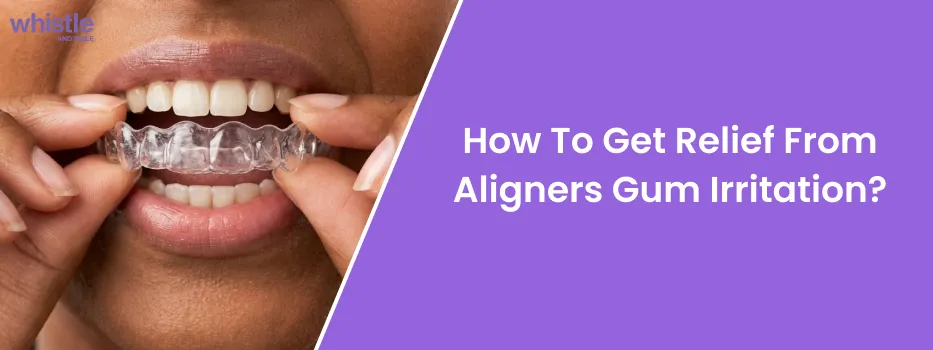
How To Get Relief From Aligners Gum Irritation?
 Medically Reviewed by Whistle Dental Team
Starting your long awaited teeth straightening journey with aligners is exciting. Congratulations on taking that first step for your smile. While it’s a long road ahead, a lot of it can feel confusing. The moment you put on your first set of aligners, your joy might have subsided as there might have been slight discomfort followed by gum soreness. Now you're wondering: Is this painful gum soreness a long-term part of the deal, or should you actually be concerned?
We don’t wanna scare you about the process, but help you understand what sort of soreness is normal during the initial days and what demands special attention. Also above all what can you do at home for immediate relief.
Why Do Aligners Cause Gum Irritation?
Adjusting to a new foreign appliance in your mouth takes a little time. If you feel a bit of soreness or irritation along your gumline during the first week, it is completely normal.
Aligners apply steady, continuous pressure to guide your teeth into a balanced position. Because your tongue, cheeks, and gums aren't used to sharing space with a dental appliance, the constant contact can cause mild friction at first.
However, a major hidden cause of gum irritation is the way an aligner is manufactured. Many generic aligners are cut using a straight, automated laser line that passes directly over the soft gum tissue. If the plastic edges aren't smooth, they can act like a tiny, rough ledge that constantly rubs against your delicate gums as you talk and chew.
Common Symptoms of Aligner Gum Irritation
It is easy to tell if your mouth is simply adapting or if the plastic is actively irritating your tissues. Look out for these common signs:
1. Localized Redness:
The specific edge of the gum tissue directly touching the plastic looks bright red or slightly swollen.
2. Minor Raw Spots or Canker Sores:
Small, tender white or yellow sores develop right where the aligner edge sits.
3. Tenderness When Eating:
Your gums feel raw or sensitive to spicy, salty, or hot foods when you take your trays out to eat.
4. A "Digging In" Sensation:
Feeling a sharp pinch or scraping sensation every time you speak or swallow.
How To Get Relief From Aligners Gum Irritation
If your trays are making your gums feel raw, you don’t have to just sit and suffer through it. Here are the fastest ways to get immediate relief:
1. Orthodontic relief Wax
This is your first line of defense. Take a tiny, pea-sized ball of medical-grade orthodontic relief wax, roll it between your fingers to warm it up, and press it directly over the sharp or rough edge of your aligner tray. This creates a smooth, comfortable barrier between the plastic and your gums, allowing the soft tissue time to heal.
2. Ask Your Provider to Trim the Trays
If the aligner is physically sitting too high up on your gums, do not try to cut it yourself with scissors, as this can warp the plastic and ruin your teeth tracking. Instead, drop by your provider's clinic. They can use specialized dental wheel-buffers to safely trim and polish the edges in less than two minutes.
3. Smooth the Edge with a Nail-filer
If a specific spot on your tray feels sharp, and you are unable to visit your orthodontic care provider, you can gently smooth it down at home. Use a clean, fine-grit emery board (a standard nail file) to very lightly buff the rough plastic edge away from your gums. Always file in one direction and check with your finger to ensure it feels completely smooth before popping it back in.
Note: This is only recommended in cases when taking professional help is not an option, as when done unsupervised can damage/distort the aligners.
Home Remedies for Soothing Irritated Gums
While your mouth adapts to the trays, you can use these simple, natural home remedies to calm inflammation:
- Warm Saltwater Rinses: Mix half a teaspoon of salt into a glass of warm water. Swish it gently around your mouth for 30 seconds before spitting. Saltwater is a natural disinfectant that reduces swelling and accelerates tissue healing.
- Cold Compresses or Ice Water: Sip ice-cold water with your aligners in, or apply a cold pack to the outside of your cheek to numb the area and bring down mild swelling.
- Over-the-Counter Soothing Gels: Apply a tiny dab of an oral topical anesthetic gel (like benzocaine) directly to the irritated gum spot for quick, temporary numbing relief before bedtime.
How Long Does Gum Irritation From Aligners Last?
For most patients, gum irritation is a short, temporary phase. Your mouth tissues are remarkably resilient and adapt quickly through a process called keratinization, essentially building up tougher, healthier tissue where the friction occurs.
Typically, any mild soreness or rubbing completely fades away within 3 to 7 days of starting with your new set of aligners. Once your mouth adjusts to the shape of the aligners, subsequent tray changes rarely cause the same level of tissue irritation.
When Should You Contact Your Orthodontist?
While minor irritation is part of the adjustment phase, you should never be in severe pain. Contact your treating doctor if you experience:
- Bleeding gums that do not stop after a few days.
- A deep, painful cut or ulcer that makes it impossible to wear your aligners for the required 22 hours a day.
- Severe swelling or signs of infection, such as fever or a foul taste in your mouth.
- An aligner tray that visibly bends or pinches your gums out of shape when you bite down.
Tips to Prevent Gum Irritation During Aligner Treatment
Preventing irritation starts with choosing a product engineered for maximum tissue comfort.
The Whistle Scalloped-Edge Advantage
At Whistle, we believe that straightening your teeth shouldn’t come at the expense of your daily comfort. Generic aligners are often cut straight across, meaning the plastic rides high up onto your sensitive gums.
Whistle aligners are custom-manufactured using advanced laser scalloping technology. Every single tray is precision-trimmed to mirror the exact, wavy anatomy of your natural gumline. The plastic sits neatly just below the tissue edge, completely eliminating the primary cause of automated plastic friction.
Combined with our proprietary, highly flexible 3-layer polyurethane material, Whistle aligners deliver a soft, highly secure fit that minimizes initial stiffness and prevents painful tissue digging, allowing your treatment to progress seamlessly and up to 33% faster without the classic raw spots.
Maintain Immaculate Aligner Hygiene
Bacteria thrive in dark, moist spaces. If you pop your aligners back in without brushing your teeth after a meal, food sugars and bacteria get trapped directly against your gums. This stagnant environment triggers rapid gum inflammation (gingivitis), making your tissues highly sensitive to ordinary friction. Always rinse your trays and brush your teeth before putting your aligners back on.
Are Certain People More Prone to Gum Irritation?
Yes, oral anatomy varies wildly from person to person. You may notice more frequent irritation if you have:
1. A High or Uneven Gumline:
Where the tissue naturally sits lower or higher on certain teeth.
2. Sensitive Gums or Early-Stage Gingivitis:
If your gums are already slightly inflamed before starting treatment, the physical presence of plastic will exacerbate that sensitivity.
3. Chronic Dry Mouth (Xerostomia):
Saliva acts as a natural lubricant. Without adequate saliva flow, the dry plastic of an aligner creates significantly more friction against your cheeks and gums.
Also Read
Book 3D Teeth Scan
Consult our experts and get a 3D preview of your smile transformation!
aligners gum irritation
gum pain with aligners
sore gums from aligners
clear aligners
aligner discomfort
FAQ's
Q1.Can I leave my aligners out for a day to let my gums heal?
It is highly discouraged. To keep your treatment tracking accurately, clear aligners must be worn for 22 hours a day. Leaving them out for an entire day allows your teeth to subtly drift backward, meaning your trays won't fit correctly when you put them back in, ultimately causing more painful friction and extending your total treatment timeline.
Q2.Does Whistle provide at-home trimming tools?
No. Because we strictly provide premium products and do not support unsupervised "DIY" dentistry, we do not package modification tools with our kits. If an aligner requires a structural adjustment, it should always be evaluated in person by one of our 00+ certified partner dentists or orthodontists to ensure your smile remains completely safe.
Q3.Why do my gums only hurt when I put a new tray in?
Each new set of Whistle aligners is programmed with slight structural shifts to move your teeth to the next phase. This means a new tray will apply slightly different pressure points against your teeth and surrounding gums. This mild pressure is a sign that the rebalancing process is working and typically disappears within 48 hours.

 Medically Reviewed by Whistle Dental Team
 Medically Reviewed by Whistle Dental Team












 Medically Reviewed by Whistle Dental Team