
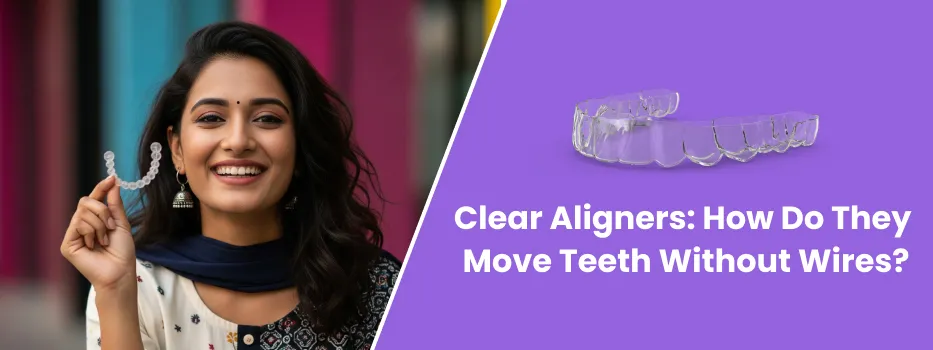
Clear Aligners: How Do They Move Teeth Without Wires?
 Medically Reviewed by Whistle Dental Team
You’ve probably heard of Whistle Aligners and other clear aligner systems, which are the invisible trays that straighten teeth. But have you ever wondered how something wire-free can actually move teeth? Let’s dive into the magic behind these orthodontic marvels.
Most people associate teeth straightening with one image: metal brackets, archwires, and a year or two of visible hardware. It makes sense — for decades, that was the only way to move teeth predictably.
Clear aligners changed that. Today, millions of people straighten their teeth using transparent plastic trays that sit snugly over their teeth, apply precise pressure, and shift things into place — with no wires, no brackets, and no monthly tightening appointments.
Here's how they actually work, who they're right for, and what the treatment looks like from start to finish.
What Are Transparent Braces for Teeth?
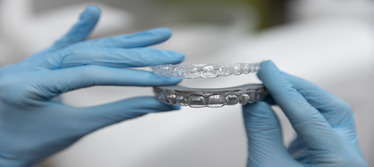
Transparent braces is the everyday term people use for clear aligners - thin, custom-made trays crafted from medical-grade thermoplastic that fit over your upper and lower teeth.
Clear aligners are custom-made, transparent plastic trays designed in the shape of your teeth to fit over them. Unlike traditional braces, they rely on a series of successive trays to shift your teeth, not wires or brackets. Each tray represents a step in your journey toward a straighter smile.
They aren't braces in the traditional sense. There are no brackets bonded to your teeth, no metal wires threaded through them, and no elastic bands creating tension. Instead, the tray itself does the work. Each tray is designed with very precise, deliberate deviations from your current tooth positions, and when you wear it, your teeth are gently pushed toward where the tray wants them to be.
You wear each tray for one to two weeks before progressing to the next one in the series. Over time tray by tray your teeth shift toward their final, corrected position.
How Do They Work? The Basic Principle of Force
At the heart of any tooth movement target is controlled force. Teeth aren’t rigidly fixed; they sit within the jawbone, cushioned by a periodontal ligament. When pressure is exerted:
- In front of the tooth, the bone is resorbed and broken down.
- Behind the tooth: new bone is deposited to fill the space
This push-and-grow cycle allows the tooth to translate through the bone gradually under gentle, sustained pressure.
Clear aligners apply this pressure in a soft, steady way. Each aligner tray is shaped slightly differently, and each one represents the next "stop" in the 3D plan mapped by your orthodontist or dentist. When you snap it on, the tray is designed to be a bit tighter than your current tooth positions.
- This slight mismatch causes the tray to push your teeth just a small amount, which is usually around 0.25–0.33 mm per tray
- You typically wear each tray for one to two weeks, then move on to the next in the series
How Do Clear Aligners Move Teeth Without Wires?
This is the question most people don't think to ask, and it's worth understanding clearly.
Traditional braces work through a system of tension. A wire runs through brackets bonded to each tooth, and when the orthodontist adjusts or tightens that wire, it exerts force in specific directions, pulling and pushing teeth along the wire's path.
Clear aligners work through controlled pressure from the tray material itself.
Here's the mechanism:
1. Digital treatment planning
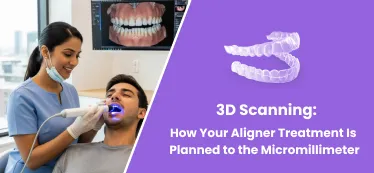
Before your first tray is made, your orthodontist takes a 3D digital scan of your teeth. Orthodontic software maps out every movement your teeth need to make — how many degrees each tooth should rotate, how far it needs to tip, how much vertical movement is needed. The entire treatment is planned digitally before it begins.
2. Sequential trays, each slightly different
Each tray in your series is designed to represent one small step in that digital plan. The tray doesn't match your current tooth positions exactly — it's shaped for where your teeth will be two weeks from now. This mismatch between the tray's shape and your actual teeth is what creates the corrective force.
3. Controlled force on specific teeth
When you put the tray in, it exerts gentle but consistent pressure against whichever teeth need to move. The force is distributed and graduated — not sudden, like a wire tightening. This is why aligners are typically less painful than traditional braces, particularly after adjustments.
4. Attachments for complex movements
For teeth that need rotation, significant tipping, or vertical movement, small tooth-coloured bumps called attachments are bonded to specific teeth. These give the tray additional leverage — essentially creating a physical grip point so the tray can pull or push in directions it wouldn't otherwise manage. Not everyone needs attachments; your orthodontist determines this based on your treatment plan.
5. Bone remodelling does the rest
Like all orthodontic treatment, what actually moves teeth is biology, not just mechanics. Sustained pressure stimulates the bone surrounding the tooth root to remodel — breaking down on the pressure side and rebuilding on the tension side. This is the same process that occurs with wire braces; clear aligners simply apply the pressure differently.
Two Systems: Displacement vs Force-Driven
Orthodontists describe two main biomechanics:
- Displacement-driven: The tray holds the tooth in its new position, and you simply align the tooth to a predefined mold
- Force-driven: Precise pressure points like bumps or grooves apply controlled forces to achieve complex movements like torque or root adjustment PMC.
Most clear aligner systems use both methods, combining general tray shape with strategically placed pressure points to guide subtle and complex movements.
Attachments:
Some teeth require more complex moves like rotations, vertical adjustments, or torque. To handle this, orthodontists add small tooth‑colored attachments, which are tiny tabs made of composite, to your teeth. Their shape, size, and location are all custom‑designed to suit your treatment plan.
Who Is a Good Candidate for Braces Without Wire?
Clear aligners work best for:
- Adults and teens who have all or most of their permanent teeth
- Mild to moderate crowding, spacing, or bite issues
- People who can commit to wearing the trays for at least 22 hours daily
- Those who want discreet treatment during active professional or social lives
- Patients with good baseline oral health (healthy gums and no active cavities)
They may not be the right choice for:
- Children whose teeth are still developing
- Patients with severe bite misalignment or jaw problems
- People unlikely to maintain the required wear time
- Cases where very precise torque control on specific teeth is needed
If you're unsure which category you fall into, that's exactly what a consultation and 3D scan resolves.
The Role of Digital Planning
Behind every set of trays is a powerful digital roadmap:
- Your teeth are scanned or molded into a digital 3D model
- The desired final position is plotted.
- The aligners are manufactured using CAD/CAM and 3D printing, using elastic thermoplastics that are just flexible enough to do the job
This digital precision allows each tray to apply just the right pressure at the right time.
Biological Response: Bone Remodeling
As your aligners apply pressure, your body is doing the hard work underneath:
- The periodontal ligament responds, signaling bone‑removing cells (osteoclasts) at the pressure side and bone‑building cells (osteoblasts) on the tension side.
- This bone remodeling process takes time, which is why consistent wear (20–22 hours daily) is vital; it keeps growth balanced so teeth move properly
The result? Your teeth gradually shift and eventually lock into their new position once the bone has healed.
Benefits & Limitations
Pros:
- Discrete: Clear and almost invisible.
- Comfortable: Smooth plastic causes fewer sores than metal braces. Allure.
- Removable: Ideal for eating, brushing, and flossing, and no dietary restrictions
- Advanced tech: Digital planning makes treatment efficient and precise
Cons:
- You must wear them 20–22 hours/day, or progress slows
- Not always for severe cases: Best for mild-to-moderate issues (1–6 mm misalignments)
- Those small tabs are discreet but visible.
- Occasional refinements: Some cases need extra trays later to fine‑tune the result.
Once treatment wraps up, the hard work isn’t over. Your periodontal ligaments and bone need time to stabilize. That’s where retainers come as they keep teeth from drifting back during healing
Also Read:
- The Evolution of Clear Aligners: Straightening Teeth & Smiles
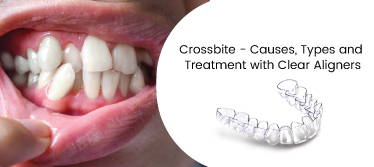
- Crossbite - Causes, Types, and Treatment with Clear Aligners
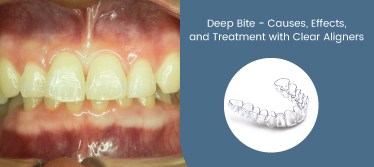
- Deep Bite - Causes, Effects, and Treatment with Clear Aligners
- How to Fix Crooked Teeth without Braces: Best Alternative to Braces
The Treatment Journey: What to Expect
The Aligners vs Braces Debate
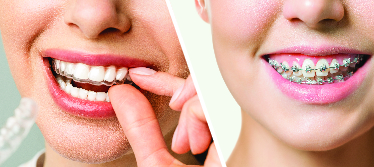
Clear aligners and braces both use the same biological principles—controlled force and bone remodeling. But they differ in delivery:
| Feature | Clear Aligners | Traditional Braces |
| Visibility | Nearly invisible, clear plastic | Metal wires/brackets, very visible |
| Comfort | Smooth, removable, fewer sores | Can irritate gums, require wire adjustments |
| Precision force | Digital setup; attachments aid complex moves | Targeted force via wires, elastics, springs |
| Supervision | Fewer office visits, but compliance is crucial | More frequent adjustments by the orthodontist |
| Ideal cases | Mild-to-moderate crowding | Effective for complex misalignment |
| Hygiene | Easy brushing/flossing | Harder to clean around brackets |
For intricate movements like heavy root tipping or major bite corrections, braces may be better. Nevertheless, advances in aligner technology are narrowing that gap.
Also Read:
Conclusion
Invisible aligners leverage science and technology to offer a flexible, comfortable, and nearly invisible path to a better smile:
- Custom trays deliver precise force to target teeth.
- Attachments help tackle tough movements.
- Bone and ligament adapt naturally over time.
- A digital roadmap and modern manufacturing make the process smooth and predictable.
If you're considering straightening your smile, ask an orthodontist about clear aligners. They’ll evaluate whether your case fits (especially if your misalignment is mild to moderate) and guide you through a plan tailored to you, possibly using attachments, staged trays, and digital tools to make the journey as seamless and successful as possible
Book 3D Teeth Scan
Consult our experts and get a 3D preview of your smile transformation!
FAQ's
Q1.Do braces without wire hurt?
There's typically mild pressure or soreness for 1–3 days after switching to a new tray. This fades as your teeth settle into position. Most patients rate aligner discomfort as noticeably less than the soreness after wire-tightening appointments.
Q2.Will clear aligners affect my speech?
Many people notice a slight lisp for the first few days. This resolves quickly as your tongue adjusts to the trays — usually within a week.
Q3.How do I keep transparent braces clean?
Rinse your trays under lukewarm water every time you remove them. Clean with a soft toothbrush and clear, unscented soap. Avoid toothpaste (it scratches the surface) and hot water (it warps the tray). Always brush and floss before reinserting.
Q4.How long does transparent braces treatment take in India?
Most cases range from 6 to 18 months, depending on the degree of correction needed. Simple spacing or mild crowding cases can sometimes complete in under a year.

 Medically Reviewed by Whistle Dental Team



 Medically Reviewed by Whistle Dental Team








 Medically Reviewed by Whistle Dental Team