
Aligners vs Braces: Which Is Better for Straightening Teeth?
 Medically Reviewed by Whistle Dental Team
If you're considering orthodontic treatment to straighten your teeth, you've likely come across two popular options: braces and clear aligners. Both treatments can correct misaligned teeth, improve your bite, and enhance your smile, but they differ significantly in terms of appearance, comfort, maintenance, and treatment approach.
Choosing between braces and clear aligners can feel overwhelming, especially when both options promise effective results. This guide compares braces and clear aligners across all key factors to help you make an informed decision.
What Are Braces?
Braces are a traditional orthodontic treatment that uses brackets attached to the teeth and connected by wires.
These components work together to gradually move teeth into their desired positions over time.
Modern braces have evolved significantly and are now available in different types:
- Metal Braces
- Ceramic Braces
- Self-Ligating Braces
- Lingual Braces
Braces are fixed appliances, meaning they remain attached to your teeth throughout the treatment period and can only be removed by an orthodontist.
How Braces Work?
- Severe crowding
- Large gaps between teeth
- Complex bite issues
- Rotated teeth
- Jaw alignment problems
What Are Clear Aligners?
Clear aligners are transparent, removable trays custom-designed to fit over your teeth.
They gradually move teeth into alignment through a series of digitally planned stages.
Each aligner tray is typically worn for 1–2 weeks before progressing to the next set.
Popular reasons patients choose clear aligners include their discreet appearance and flexibility.
How Clear Aligners Work?
Using advanced 3D scanning and treatment planning software, orthodontists create a personalized treatment plan. A series of aligners is then manufactured to move teeth incrementally toward the final desired position.
For optimal results, aligners should be worn for 20–22 hours per day.
Clear aligners are commonly used to treat:
- Mild to moderate crowding
- Spacing issues
- Minor bite corrections
- Relapse after previous orthodontic treatment
Braces vs Clear Aligners: Quick Comparison Table
| Feature | Braces | Tooth Aligners |
| Visibility | Highly visible | Nearly invisible |
| Removability | Fixed | Removable |
| Comfort | Moderate discomfort | Generally more comfortable |
| Oral Hygiene | More difficult | Easier |
| Food Restrictions | Yes | No |
| Treatment Monitoring | Regular adjustments | Periodic check-ups |
| Compliance Required | Low | High |
| Severe Cases | Excellent | Limited in some cases |
| Cost | Varies | Often comparable |
| Lifestyle Flexibility | Lower | Higher |
Cost Comparison: Braces vs Clear Aligners
One of the most important factors patients consider is treatment cost.
Braces Cost
The cost of braces varies depending on:
- Type of braces chosen
- Complexity of the case
- Treatment duration
- Geographic location
Traditional metal braces are generally the most affordable option, while ceramic and lingual braces tend to be more expensive.
Clear Aligners Cost
Clear aligner pricing depends on:
- Number of aligners required
- Complexity of tooth movement
- Brand and provider
- Additional refinements
For mild to moderate cases, aligners may be similarly priced to braces. More complex cases can require longer treatment plans and additional aligners.
Which Option Offers Better Value?
The answer depends on your goals. If aesthetics and convenience are priorities, clear aligners may provide greater value. If you have complex orthodontic needs, braces often deliver more predictable results.
Treatment Duration Comparison
Braces Treatment Time
Most braces treatments take between 12 and 36 months depending on the severity of misalignment.
Factors affecting treatment duration include:
- Complexity of the case
- Patient age
- Oral health condition
- Consistency of appointments
Clear Aligners Treatment Time
Many aligner treatments are completed within 6 to 24 months.
However, treatment success depends heavily on patient compliance. Wearing aligners less than the recommended duration can significantly increase treatment time.
Which Is Faster?
For mild and moderate cases, clear aligners can often achieve results faster. For complex orthodontic issues, braces may remain the more efficient treatment option.
Comfort and Pain Levels
Comfort and Pain Levels
Braces
Braces can cause discomfort due to:
- Bracket irritation
- Wire adjustments
- Pressure after tightening appointments
Patients often experience soreness for a few days after adjustments.
Clear Aligners
Clear aligners generally provide a more comfortable experience because:
- No metal brackets or wires
- Smooth plastic trays reduce irritation
- Gradual tooth movement
Some pressure is expected when switching to a new aligner tray, but discomfort is usually mild.
Winner: Clear Aligners
Most patients report greater comfort with clear aligners compared to traditional braces.
Appearance and Aesthetics
For adults and professionals, appearance is often a deciding factor.
Braces
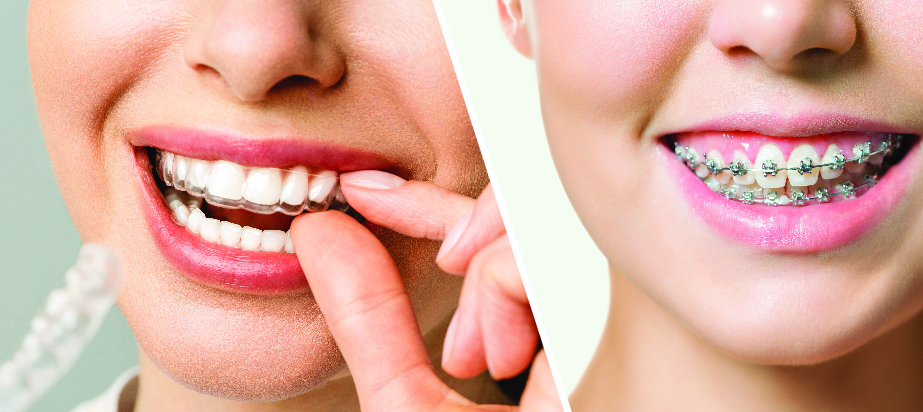
Traditional braces are visible when speaking or smiling. Ceramic braces offer a more discreet alternative but remain noticeable.
Clear Aligners
Clear aligners are made from transparent medical-grade plastic and are designed to be nearly invisible.
Many people may not notice you are undergoing orthodontic treatment.
Winner: Clear Aligners
For patients seeking a discreet treatment option, clear aligners are the clear winner.
Eating and Oral Hygiene
Braces
Patients with braces often need to avoid:
Sticky foods
Hard candies
Nuts
Chewing gum
Crunchy snacks
Cleaning around brackets and wires can also be challenging.
Clear Aligners
Aligners are removed before eating and drinking (except water), allowing patients to enjoy their normal diet.
Brushing and flossing remain simple because there are no brackets or wires obstructing oral hygiene.
Winner: Clear Aligners
The removable nature of aligners makes eating and maintaining oral hygiene significantly easier.
Effectiveness for Different Dental Problems
Conditions Best Treated with Braces
Braces are highly effective for:
- Severe crowding
- Significant tooth rotations
- Complex bite problems
- Jaw discrepancies
- Large spacing issues
Conditions Suitable for Clear Aligners
Aligners work well for:
- Mild crowding
- Moderate spacing
- Minor bite corrections
- Cosmetic alignment concerns
Winner
For highly complex orthodontic cases, braces generally remain the gold standard.
For mild to moderate cases, clear aligners can deliver excellent outcomes.
Pros and Cons of Braces
Advantages
Effective for complex cases
Works continuously
No need to remember wearing them
Suitable for all age groups
Disadvantages
More visible
Food restrictions
Challenging oral hygiene
Potential mouth irritation
Pros and Cons of Clear Aligners
Advantages
- Nearly invisible appearance
- Removable convenience
- Better oral hygiene
- Fewer dietary restrictions
- Comfortable treatment experience
Disadvantages
- Requires discipline
- Must be worn 20–22 hours daily
- Can be misplaced
- Not ideal for every severe case
Who Should Choose Braces?
Braces may be the better option if you:
- Have severe misalignment
- Need complex bite correction
- Prefer a fixed treatment solution
- Are concerned about remembering to wear aligners
Orthodontists often recommend braces when maximum control over tooth movement is required.
Who Should Choose Clear Aligners?
Clear aligners may be ideal if you:
- Want a discreet treatment option
- Have mild to moderate alignment issues
- Prefer flexibility and convenience
- Travel frequently
- Want fewer lifestyle restrictions
Many working professionals and adults choose aligners due to their aesthetic benefits.
Expert Orthodontist Recommendation
There is no universal "best" treatment. The right choice depends on:
- Your dental condition
- Treatment goals
- Lifestyle preferences
- Budget
- Compliance level
An orthodontic consultation with digital scans and a professional assessment can determine which option is most suitable for your specific case.
Final Verdict: Braces vs Clear Aligners
Both braces and clear aligners are effective orthodontic treatments capable of transforming your smile.
Choose braces if you have complex orthodontic issues that require precise and comprehensive correction.
Choose clear aligners if you value aesthetics, comfort, and flexibility while treating mild to moderate alignment concerns.
The best treatment is the one that aligns with your dental needs and lifestyle while delivering healthy, long-term results.
Book 3D Teeth Scan
Consult our experts and get a 3D preview of your smile transformation!
Braces
Clear Aligners
FAQ's
Q1.Are clear aligners as effective as braces?
For many mild and moderate cases, clear aligners can be just as effective as braces. Complex cases may still benefit from braces.
Q2.Are braces cheaper than clear aligners?
Costs vary based on treatment complexity and provider. In many cases, pricing is comparable.
Q3.Which treatment hurts more?
Braces generally cause more discomfort due to brackets, wires, and tightening appointments.
Q4.Can clear aligners fix severe crowding?
Some severe cases may require braces or a combination of treatments.
Q5.Which option is better for adults?
Many adults prefer clear aligners because they are discreet, removable, and easier to maintain.
Q6.Do braces work faster than aligners?
The answer depends on the complexity of the case. Aligners can be faster for simple cases, while braces may be more efficient for complex corrections.

 Medically Reviewed by Whistle Dental Team




 Medically Reviewed by Whistle Dental Team









 Medically Reviewed by Whistle Dental Team